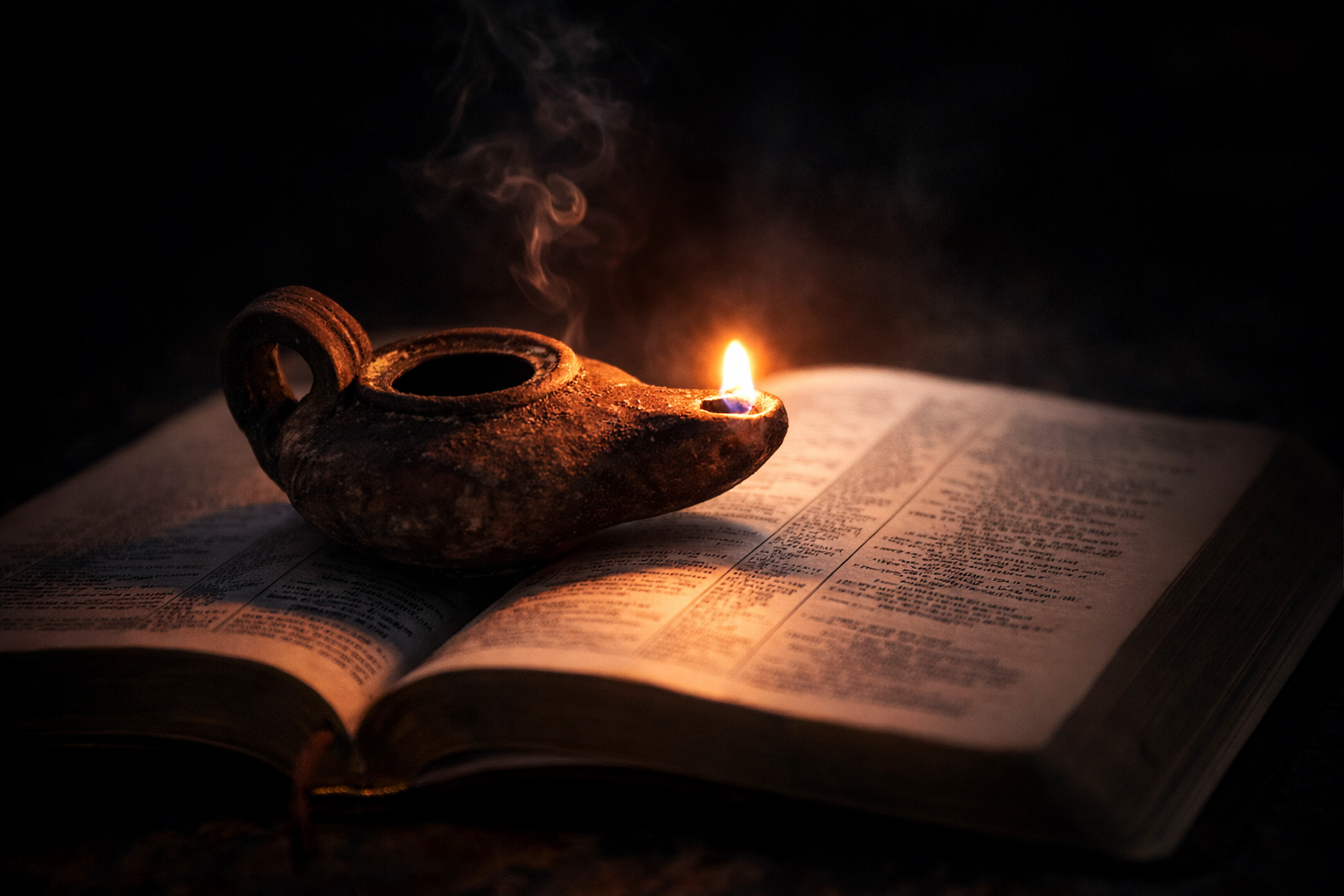
There is one thing you cannot afford to lose in these last days: the oil. The oil represents the Holy Ghost, the very life and light of God within you. Without Him, you will not make it. You cannot walk this narrow road in your own strength. You cannot enter the Bridegroom’s chamber by human effort.
It took the Blood of Jesus to redeem you… And it takes the Spirit of the Living God to keep your lamp burning until He returns.
Your lamp may be beautiful. Your lamp may be religious. Your lamp may be moral. But your lamp is useless without oil.
The Parable That Warns Us All
“Then shall the kingdom of heaven be likened unto ten virgins, which took their lamps, and went forth to meet the bridegroom.” — Matthew 25:1 (KJV)
Ten virgins. All invited. All expecting Him. All holding lamps.
But only five had oil.
The other five believed in the Bridegroom — but belief alone did not save them.
They had:
- No oil
- No anointing
- No power
- No Holy Ghost fire
They were religious… but not ready.
The Midnight Cry
“And at midnight there was a cry made, Behold, the bridegroom cometh; go ye out to meet him.” — Matthew 25:6 (KJV)
Midnight is coming. The cry will go out. And every lamp will be tested.
The foolish cried, “Give us your oil!” But the wise answered, “Not so…”
You cannot borrow someone else’s relationship with God. You cannot borrow someone else’s prayer life. You cannot borrow someone else’s anointing. You cannot borrow someone else’s oil.
When the door shuts — it shuts.
“And they that were ready went in with him to the marriage: and the door was shut.” — Matthew 25:10 (KJV)
Five entered. Five were left behind.
The Most Terrifying Words in Scripture
“Afterward came also the other virgins, saying, Lord, Lord, open to us.” — Matthew 25:11 (KJV)
They called Him Lord. They expected Him to open. They believed He was the Bridegroom.
But He said:
“Verily I say unto you, I know you not.” — Matthew 25:12 (KJV)
Not because they didn’t believe… but because they had no oil.
The Call to Every Believer
You need the Spirit of the Holy Ghost if you are going to make it to eternal life with Yeshua. Not religion. Not tradition. Not good intentions.
You need:
- His fire
- His power
- His presence
- His voice
- His anointing
- His oil
This is the hour to trim your lamp. This is the hour to fill your vessel. This is the hour to walk in the Spirit.
“Watch therefore, for ye know neither the day nor the hour wherein the Son of man cometh.” — Matthew 25:13 (KJV)
Don’t let the oil run out. Don’t let the flame die. Don’t let the door close without you.
Reflection
Are you carrying oil… or only a lamp? Is your walk filled with the Spirit… or filled with routine? Is your heart burning… or merely believing?
Ask Jesus Christ today: “Lord, fill my vessel with Your Spirit. Let my lamp burn bright until You come.”
“This message now lives permanently at HeartOfHope777.org — our home for all Heart of Hope teachings.”